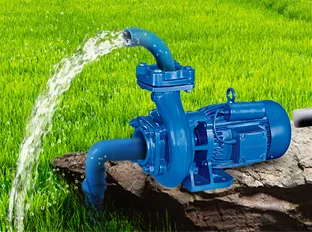
Submersible Pumps For Agriculture in India

As India is the Agrarian country most of the people are engaged in agricultural activities for their lively hood. So they will obviously need water for watering their crops and irrigation. So we manufacture the best quality of submersible pumps for which are used for water supply to crop fields and for irrigation. Farmers used these kinds of submersible pumps for delivering the water from ponds and river to their crops. These pumps are most demanded by the users because they are highly beneficial for crop fields. These pumps come with high level of energy and efficiency and cost effectiveness. 

Features of Submersible Pumps For Agriculture

  • High operating efficiency
  • Low power consumption
  • Noiseless operations
  • Easy installation
  • Minimal maintenance required
  • Durable construction
  • Corrosion resistant
  • Cost effective

Application of Submersible Pumps For Agriculture

  • Crop Irrigation
  • Drip Irrigation Systems
  • Sprinkler Systems
  • Borewell Pumping
  • Farm Water Supply
  • Livestock Water Supply
  • Pond & Tank Water Supply
  • Groundwater Extraction

FAQ for Submersible Pumps For Agriculture:

Submersible pumps are ideal for agriculture because they efficiently extract water from boreholes and wells, consume low power, require minimal maintenance, and provide reliable water supply for crop irrigation and livestock needs.
Agricultural submersible pumps can efficiently pump water from depths ranging from 30 meters to 300+ meters depending on the model, power rating, and specific pump specifications selected for the application.
Benefits include energy efficiency, reduced operating costs, noiseless operation, long service life, minimal maintenance, protection from weather elements, and reliable water supply for consistent crop yields.
Select based on borewell depth, required water flow rate, total head, soil conditions, land area to be irrigated, power supply availability (3-phase or single-phase), and the type of irrigation system you plan to use.
Regular maintenance includes periodic checks of electrical connections and cable insulation, inspection of water inlet strainers, seasonal cleaning, and monitoring for any unusual sounds or performance changes to ensure optimal operation.